Episode 200: It Took You Long Enough
Two hundred episodes, and we did what we always do for a milestone. We threw a non-event. We went to great lengths to tell everyone it was a non-event. Come if you want, come as you are, and staying home is a perfectly good option. We fully expected to record to an empty hangar.
Then a hangar full of people showed up at McCollum Field anyway. Some of you flew a very long way to sit in a 91-degree hangar and watch three guys read off pieces of paper. Thank you. It means a lot to us.
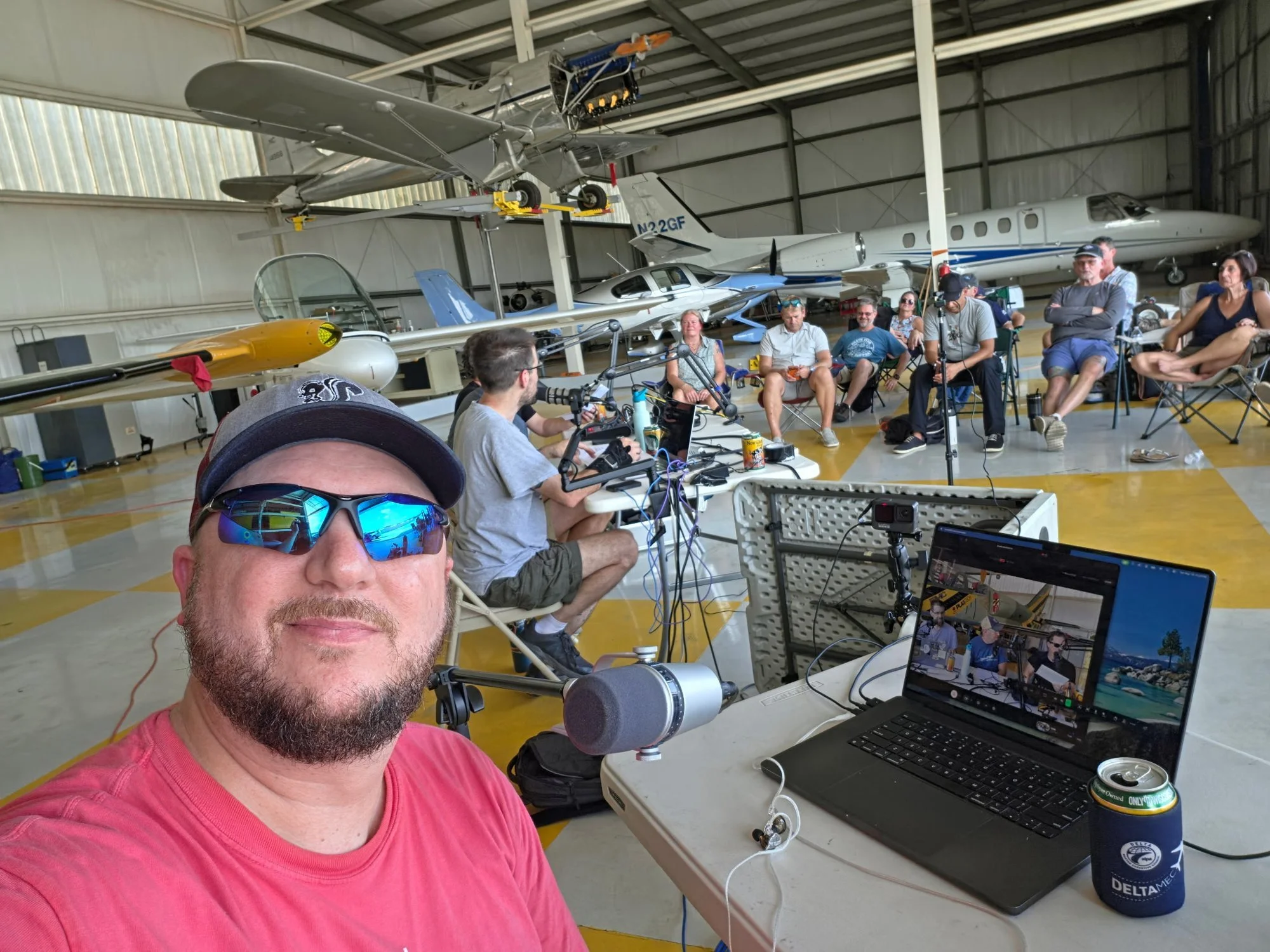
The view from the production table. Warbirds overhead, a very patient crowd, and a koozie doing its best.
How to Throw a Non-Event
Non-events are a proud tradition around here. Episode 100 was A Very Special Non-Event in Chris's hangar in Fairmont, West Virginia. Episode 200 kept the bar right where we like it. Low.
The whole idea is simple. We pick a hangar, we say we'll be there, and we promise nothing. No obligation to show up, and no guilt if you don't. Flying somewhere for a podcast is optional, and the best reason to skip it is that something else in your life mattered more that weekend.
So during the achievements segment, we gave a proud shout-out to the people who did not attend, including Mark (1DullGeek), VT Pilot, Mike Alpha Golf and OG Chris. They made a decision, and we celebrate it. Don't fly if you don't have to. When Adam showed up on his birthday, we pointed out that we had kind of encouraged him not to come. He came anyway. So did everybody else.
The Cast and Crew
Ben hosted from his home field, with engines running in the background for authenticity. Brian flew Lucy, his red-and-white Cherokee 180, down from Nashville and parked her right behind the crowd. Ted came from Portland on the airlines. He had the vacation days booked, ran the numbers on flying the Egg across the country, and decided he has some sense. Some.
The supporting cast was deep. AJ, also known as Lord Alpha Juliet of the Airline Pilot Guy show, joined us for the day. Please don't call him Substitute Mark. Luke Johnson of Luke's Landings ran production, like he has for a long time. Ben's son Evan drove the shuttle from the FBO in a Midlife Pilot Podcast shirt. Ben imagined Evan's review: you brought me into this world, and all I got was this lousy T-shirt. And Adam V. flew down from Nashville to spend his birthday sweating with us. Happy birthday, Adam.
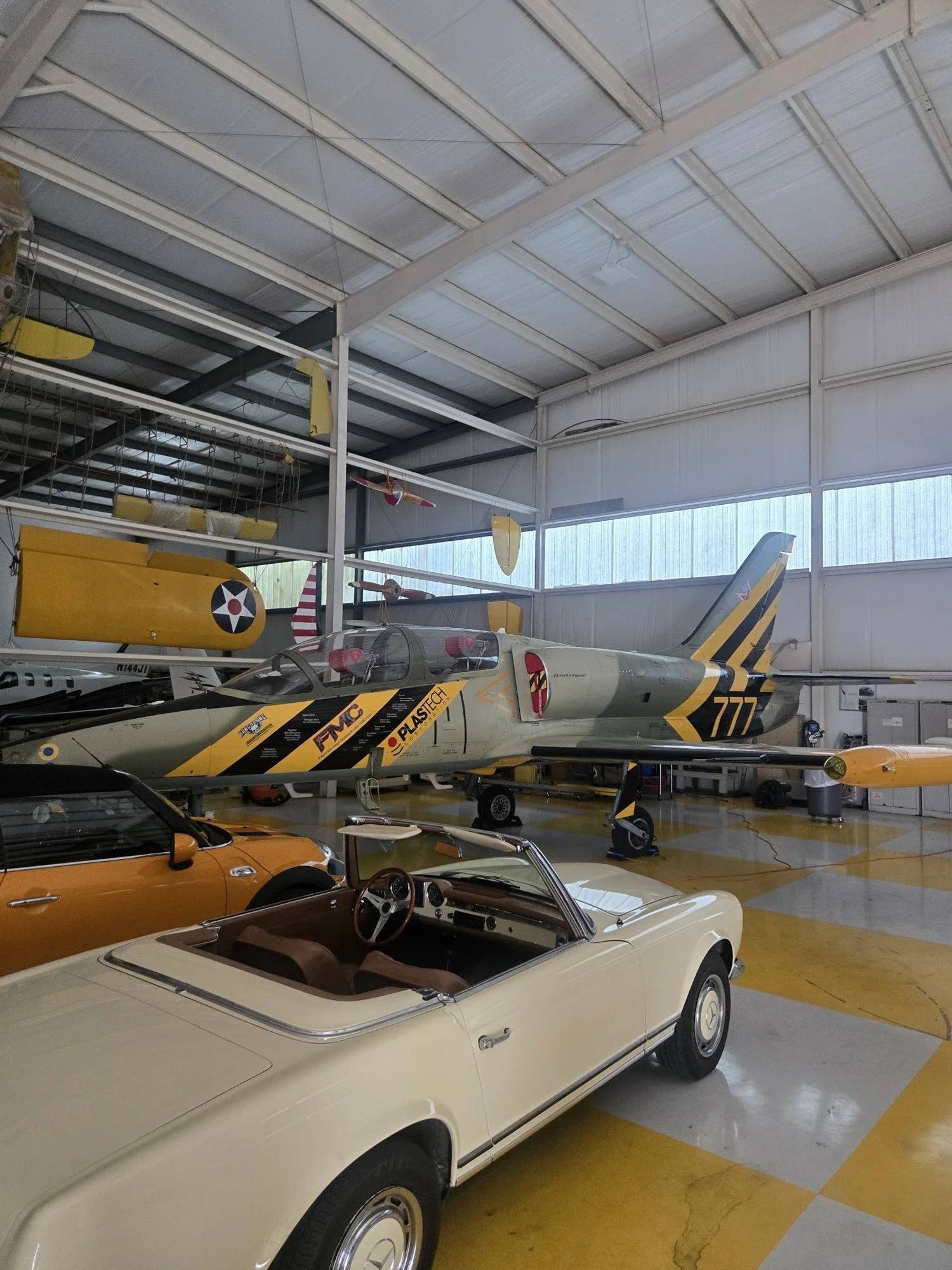
Home base for the weekend.
“It Took You Long Enough”
AJ and Ben know pretty much everybody in the McCollum tower, so AJ, being AJ, arranged a special welcome. We played the LiveATC recording on the show. The controller passed along a message for Brian: “AJ called and told me to tell you it took you long enough.”
Brian responded by nominating AJ for a Brasher warning, live on the show. For the non-pilots, a Brasher warning is when ATC gives you a phone number to call after you land. It is never good news. AJ assured everyone he already has the number.
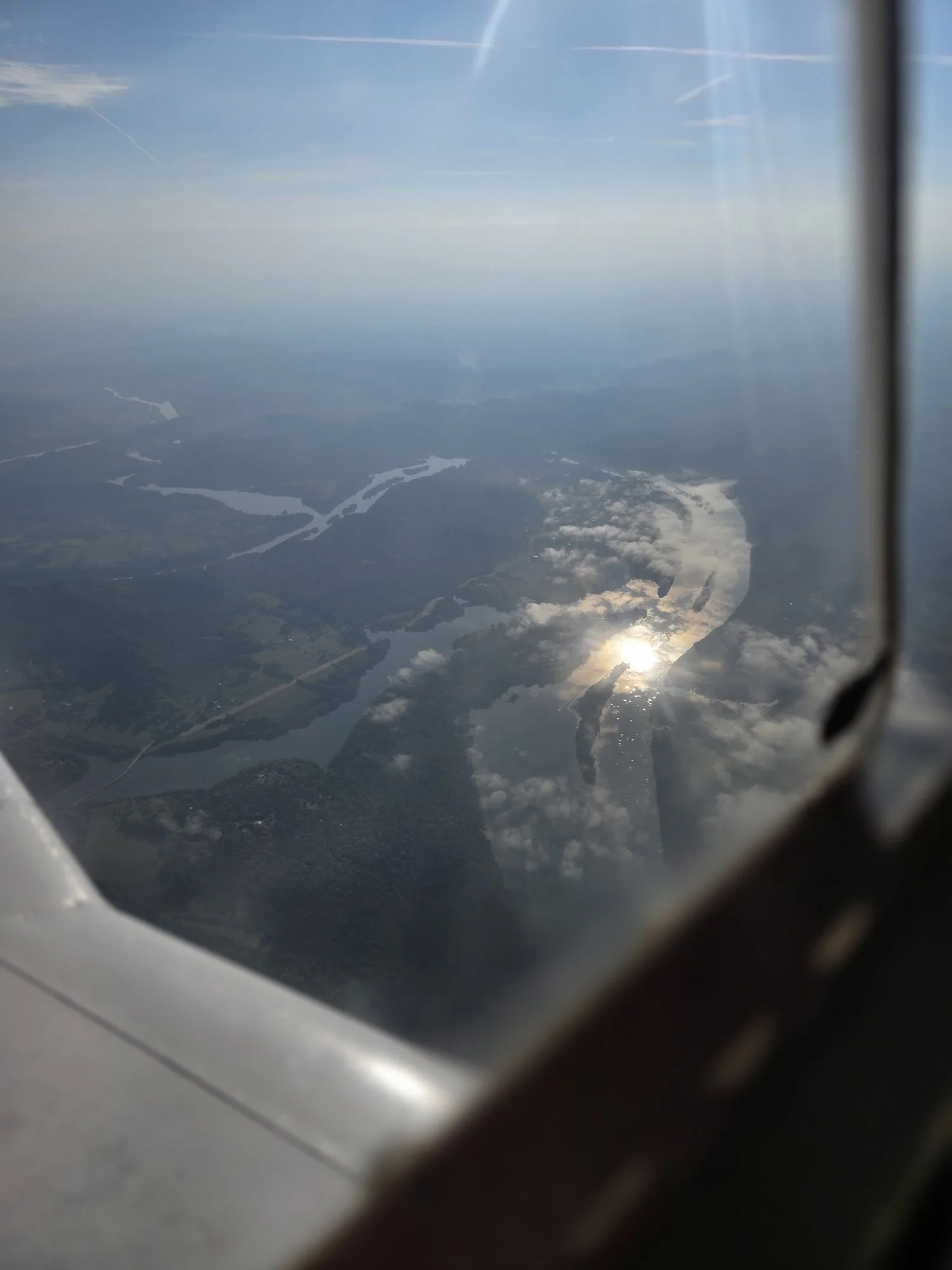
On the way down.
We Were Briefly Hijacked
Getting there had its own drama. Memphis Center gave Brian and Luke a squawk code of 7652. Lucy's transponder has the old rotary knobs, the kind that feel like changing channels on your grandmother's TV. Luke was sharing the workload from the right seat, so he started dialing from the left. Seven. Then five.
For one shining moment, Lucy was squawking 7500. The hijack code. On the controller's screen, that means bright red letters and beeping. A voice that hadn't been on frequency before popped on to ask Cherokee 5116 Lima if everything was okay.
Luke saw it happen. He leaned back in his seat, said nothing, and hoped nobody noticed. Somebody on the panel called that good CRM. Center noticed. Brian politely confirmed they were fine. As he explained to the crowd, “I didn't necessarily consider myself hijacked in this scenario.”
For our non-pilot friends: 7500 means hijack, 7600 means lost comms, and 7700 means emergency. It took us a few tries to get that right on air, which is a great reminder to never take flying advice from a podcast. The tip from the panel: on a rotary transponder, if the new code starts with a 7, dial it in from the other end.
Then came Chattanooga Approach, normally a fairly sleepy Charlie, which was on fire. They checked in just in time to hear a controller ask someone to let him know when they were ready to copy, followed by a phone number. It wasn't them. It wasn't AJ either. Another pilot, assigned something low like 3,000 feet, told ATC flatly he didn't like it down there and would squawk 1200 if he had to. A supervisor thought he was trying to cut the line into Chattanooga. He held his ground anyway. We all took a note on being your own advocate on the radio.
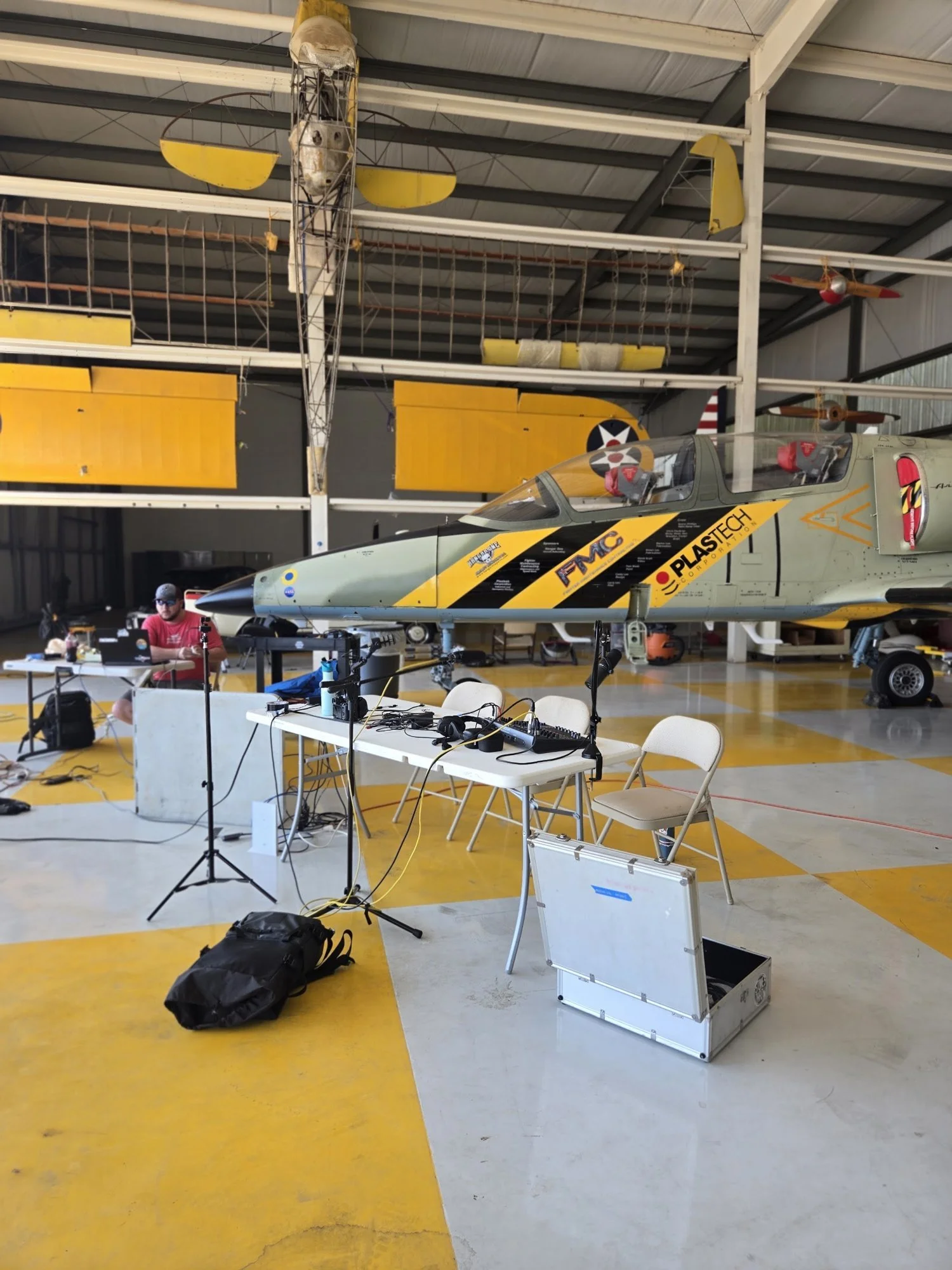
The set, before the crowd arrived.
What Have I Gotten Myself Into?
Sometimes we plan an episode days ahead. Sometimes it's 15 minutes before we go live. This topic came together about an hour before showtime, from a phrase one of us had just said out loud. What have I gotten myself into?
You ask it on your first lesson. You ask it going from no medical to a medical. You ask it sitting in a 91-degree hangar wearing headphones. Private training turns you into a part-time meteorologist, aerodynamicist and lawyer. None of it is hard on its own. There is just so much of it.
Ben is living this right now. Before indoc with his new company, he's working through 30 training modules, about 60 hours covering the FARs, the AIM, ops specs, hazmat and cold-weather operations. He's drinking from a FAR hose. He also has 40 new formulas to memorize, on top of the descent math he and Evan like to do for fun in the Beast. He says it feels like private pilot training all over again. He also says he loves it.
The money never gets easier either. “Hard drugs are cheaper” has been a running joke since our first Nashville meetup, when we recorded segments on a condo roof. One of us, a thousand hours in, reports it's more true now than when he started. Ear muffs for Ben's wife. The upside is that all this learning keeps the brain plastic. We'll take plastic in the brain over lead.
Brian is new to instrument flying, which got compared to Lord of the Rings lore. It goes deep, and flying IFR in Georgia is a different world from flying it in Colorado. When Erica was in Nashville on a contract trip, Brian drove her around town pointing at clouds. Could I fly through that one? What about that one? Official guidance from the panel: avoid the ones shaped like giraffes. On a summer trip to Texas, his wife noticed they gained 800 feet going through a cloud. Brian told her it was no big deal, while quietly asking himself whether it was okay. With Lucy's autopilot acting up, he's also working out personal minimums. Does no autopilot mean no single-pilot IFR? Or is a quick punch through a layer fine? It's the thousand-hours-new feeling all over again.
Mark (1DullGeek) sent in a message that summed it up: “The difference between what you learn in IFR training and what you have to learn is insane.”
Ted's world just opened up. Somebody described it as getting paroled. He's booking every CFI he knows at every airport he can. His private checkride is next week, and he's piling on hood work for instrument and commercial, plus night flying to cover the cross-country requirement. He was recently up in a Cessna 150 with Portland CFI Sam of Northwest Aeronaut, because learning instrument basics wasn't enough, so why not add a new airplane. In his words, it's 12 things at the same time. He also admits he chose it.
Adam is the midlife version of this story. He earned his private, then kids came along, and flying took a back seat. Now he's back. He passed his instrument rating earlier this year, joined a Cirrus flying club, and went through Cirrus transition training. He flew to McCollum on his birthday as a deliberate experience-building trip, working toward flying his family places safely. He also came to lose 11 pounds in a hangar with us, which will only help his weight and balance.
Adam gave us clearance to tease Cirrus pilots. His position, roughly: go ahead and make fun of the guy with the Lamborghini. For the non-pilots, a Cirrus has a parachute for the whole airplane. Cirrus pilots are also known for very long final approaches, and one of us admitted that if he flew one, he'd fly nothing but 20-mile finals. Adam then reminded the sweating crowd that his airplane has air conditioning. We also debated whether you can log the time after you pull the chute. No ruling was issued.
Kids, jobs and life get in the way. Flying is a big part of our lives, and it sits next to everything else. That's okay.
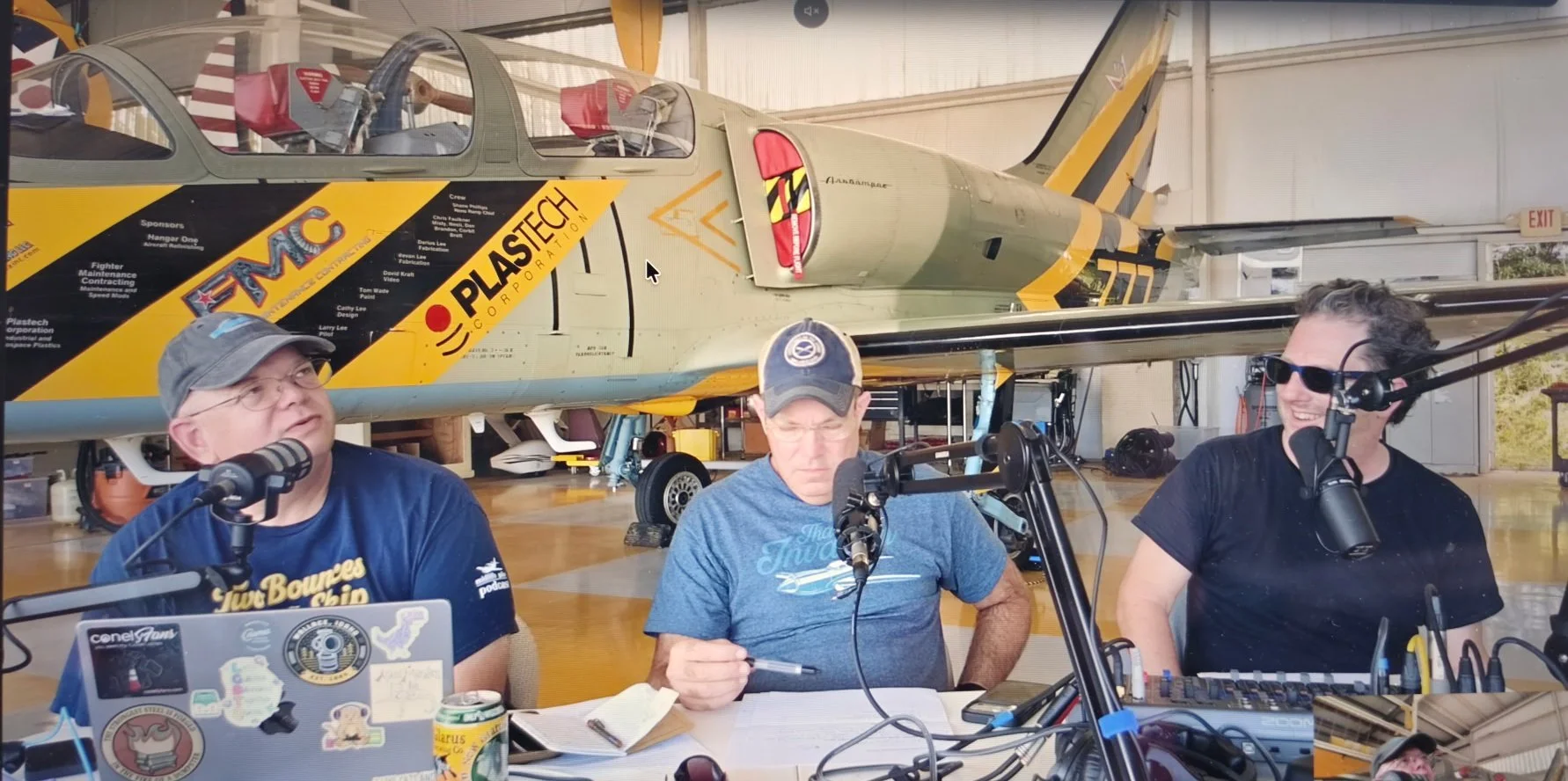
On air, with an L-39 for a backdrop.
The Midlifer Helping Shape the Nashville Bravo
Then Brian turned his microphone around, unplanned, and pointed it at Dev Cannon. Dev is based at M54 in Lebanon, Tennessee. He flies a Navion and is active in the Commemorative Air Force. He also volunteered for the FAA's ad hoc committee as Nashville's Super Charlie becomes a Class B. The job pays exactly zero dollars.
When the FAA creates a Bravo, it has to run this public process. Dev said the FAA told them the last one was in the 1990s, and that was a change to an existing Bravo, not a brand new one. Brian was at that kickoff meeting too, and says the FAA's slides felt like training to work at Wendy's. At the first meeting at MTSU, 70 or 80 pilots filled the room. Glider operators, private strip owners, people who wanted a VFR corridor, people who wanted flight following. You cannot have 70 pilots make one decision, so somebody had to synthesize it all. Dev manages projects for a living, so he signed up. His version of our theme: “why am I doing this to myself again?”
Where it stands: the morning of the show, Dev talked with a Nashville controller at a Girls in Aviation Day event. The committee's findings went in, the controllers submitted their replies about three weeks earlier, and the target is April. She said the feedback made sense to them and was received well. A few items may end up as letters of agreement instead of part of the Bravo itself. The next public step is the notice of proposed rulemaking, which is another chance for pilots to comment. As one of us noted, no good deed goes unpunished. Whatever happens will be Dev's fault.
We loved this. You can start flying three years ago in a bug smasher and end up helping shape the airspace over one of the fastest-growing metros in the country. Ted made the same point. For $75 a year, he joined the ASTM F37 committee that writes light sport aircraft standards after MOSAIC. Most of it is just deciding to show up. We're still lobbying for the name Dolly Bravo.
Also on the Show
Derek F. suggested a Discord forum with a thread for every airport, titled by ICAO code, so members can share tips and pictures and know exactly who to ask before a trip.
The Creeper Bot origin story. At our first Nashville fly-in, we shared the tail numbers of the four airplanes coming in so we could watch each other on our phones.
Mark is in the Czech Republic building his TL Sparker, and he's now modeling in the factory's promo photos. The rule is you have to be involved in 51 percent of the build processes. Mark calls it builder assist, heavy on the assist. One of us can confirm this method does not work on honey-do lists.
The tape machine. You can leave us a voicemail straight from midlifepilotpodcast.com. Press a button, talk, and we might play it on the show.
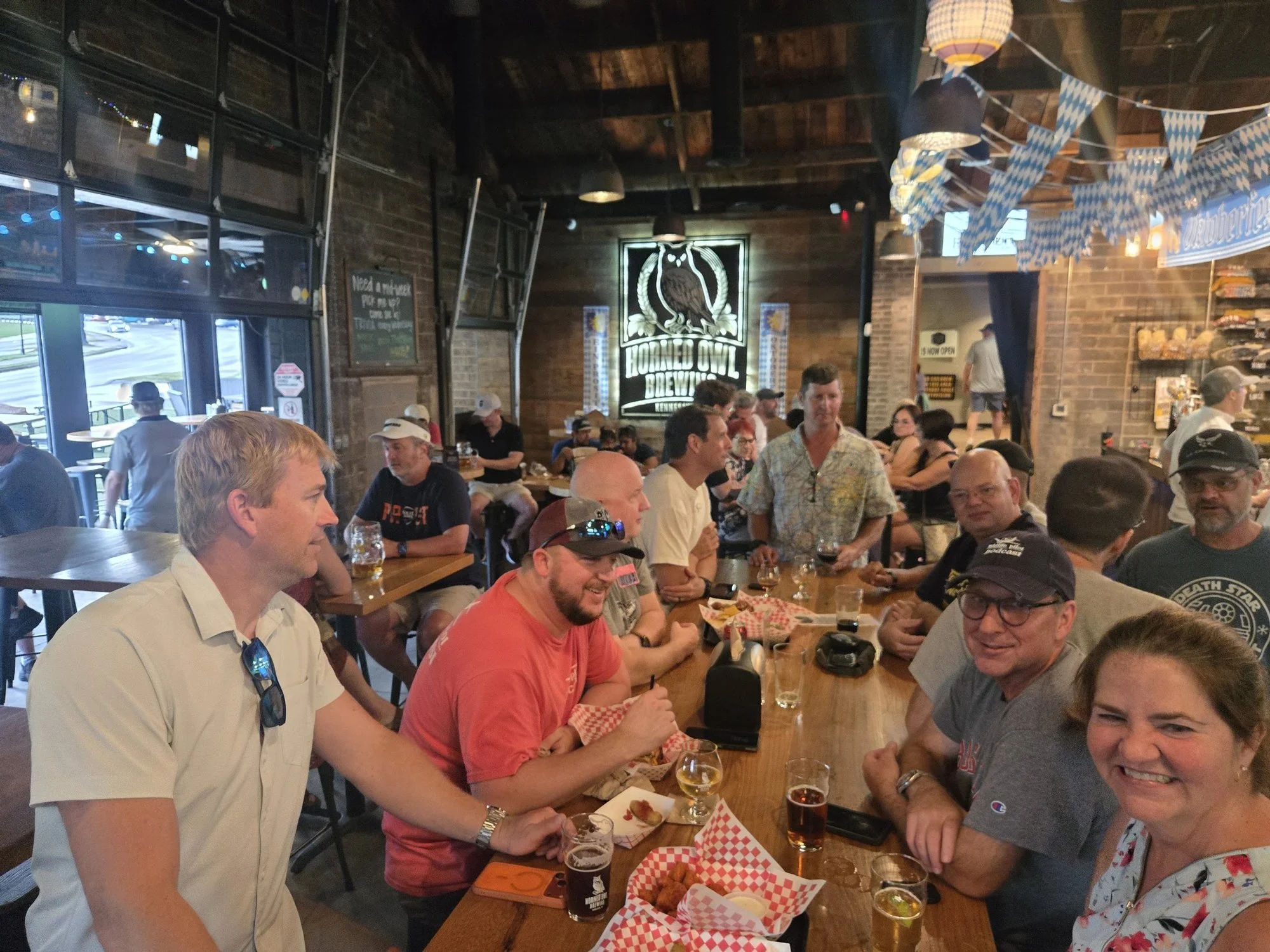
After the show.
Here's to 200
We closed with a toast to 200 episodes and a piece of wisdom for Brian, the only tailwheel-endorsed pilot of the three: “Real pilots use the rudder. Tailwheel pilots worship it.”
This whole thing is about all of you and what you're doing. Thank you for 200. Here's to the next 200. What have you gotten yourself into lately? Tell us on the tape machine at midlifepilotpodcast.com.
Listen to Episode 200
Mentioned on the show
Support the show
Join us on Patreon to keep the show ad-free and get into the Discord. Merch, the tape machine and everything else live at midlifepilotpodcast.com.
Enjoying the read? Come fly along.
A weekly aviation podcast for people who took up flying in midlife. Real talk on learning to fly, growing as pilots, and the joy of general aviation.
